With Gratitude
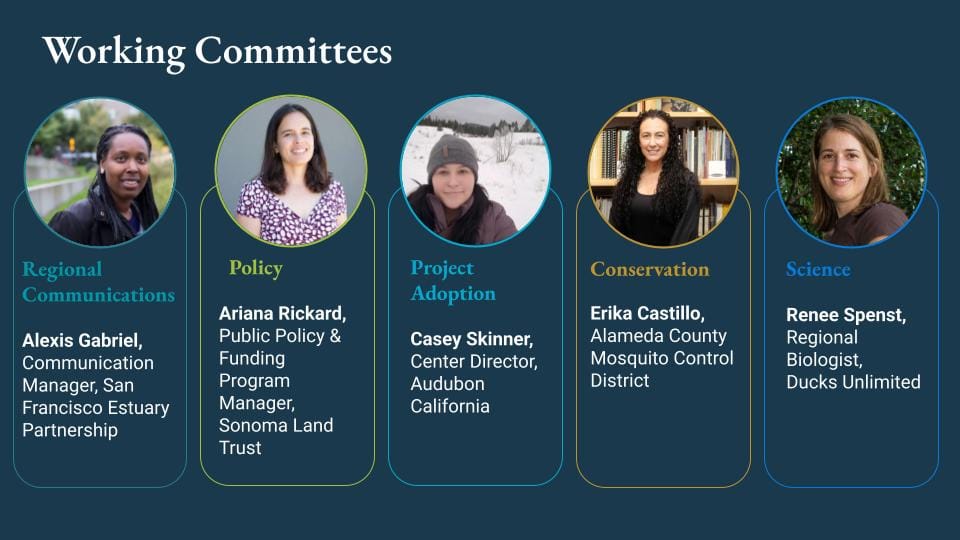
“What we can’t do alone, we can do together.” We want to extend our thanks to all of the people who make this adage real at the San Francisco Bay Joint Venture (SFBJV). The success of the SFBJV is built by the people who contribute their time and expertise to the following committees: communications, policy, conservation, science, and project adoption. We are so appreciative of the commitment people in these groups make to advance collaborative conservation in the Bay Area.
We are especially grateful for the committee chairs, whose leadership is paramount for the strategic focus, effective facilitation, and dedicated capacity needed at the helm of each group.
Regional Communications Team
Since the late ‘90s, our Regional Communications Team has met quarterly to connect, learn, and amplify each other’s work. These connections provide opportunities to amplify the impact collectively made across the region that benefits birds, other wildlife, and people.
One highlight from this year was learning from guest presenter, Sadie Samuels, Director, Experience Marketing & Partnerships atCalifornia Academy of Sciences about engaging more audiences in Bay Area conservation through social media influencers. The team learned about setting targeted communication goals and metrics designed to support organizational priorities for specific audiences.
Policy Committee
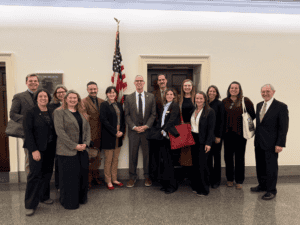
The Joint Venture’s 2022 Implementation Strategy identifies the importance of policy to bolster and support the region’s habitat goals. This committee provides partners a forum for coordination and collaboration to strategize on policies to reduce and remove barriers to achieving our region’s habitat goals.
Every year, Joint Venture staff and partners head to Washington D.C. for the annual “fly-in”; meeting with Congressionals, their staff, and government leaders. Early 2026 marked another successful year of relationship building, informational updating, and advocating for our region’s Federal appropriations requests that support the Bay Area’s habitat and resilience priorities. This approach ensures each organization’s time and resources are leveraged multiple times with decision makers hearing consistent messages and shared needs.
Project Adoption Team
The Project Adoption Team (PAT) is a group of Management Board members who volunteer to review projects seeking adoption by the Joint Venture and recommend them to the full Management Board for final adoption. The PAT applies our Project Adoption Criteria, asking above all, whether a project helps meet the habitat and climate resilience goals articulated in the Joint Venture’s Implementation Strategy.
Coordination between the PAT and CC is critical to this process This year, five projects were adopted to contribute to habitat and restoration goals that conserve migratory birds in our region.
Conservation Committee
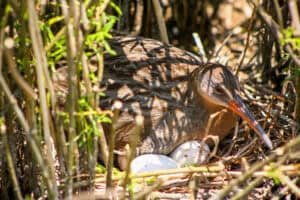
The Conservation Committee’s (CC) goal is to help get on-the-ground, habitat-focused conservation projects implemented, while also serving as a forum for sharing thoughts, reflecting on insights from previous projects, and learning about new restoration practices. This open committee that brings together land managers, conservation practitioners, scientists, and regulators. It provides a space to share ideas, discuss project design, and work through barriers to conservation action, giving project teams constructive feedback to align their designs with the goals in our Implementation Strategy.
This year, the CC gave feedback to projects seeking SFBJV project adoption, including UC Berkeley’s RISE project. RISE plans to restore 5 acres of Stege Marsh, create nature-based, living shoreline enhancements in the Outer Stege Marsh, and implement a community-engagement program at the Richmond Field Station.
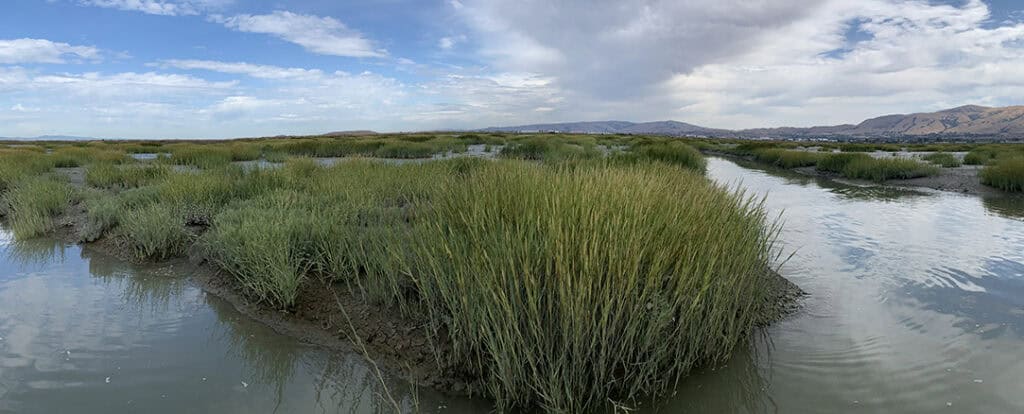
Members also heard from several partners doing excellent work on the ground. Terranova, an innovative company that literally lifts land out of the flood zones using robots, presented its method of injecting wood chip slurries underground to elevate subsided wetlands, potentially shortening restoration timelines from decades to years. The Invasive Spartina Project reported a 98% reduction in infestations since 2004 and urged new restoration projects to coordinate with the program early to prevent re-infestation. Coastal Quest also introduced its Coastal Funding Database of more than 250 coastal resilience funding opportunities, which it produces in partnership with the SFBJV.
Science Committee
Following the development of the Joint Venture’s 2022 Implementation Strategy, the Science Committee (SC) developed four top priorities that reflect the needs of conservation and restoration practitioners.
Our four priorities are:
- Understanding the distribution of wetlands and other habitats around the region;
- Using wildlife indicators to inform the region’s understanding of habitat quality;
- Supporting sediment science so that the region can advance beneficial reuse of soil and sediment for wetland restoration; and
- Participating in the Wetland Regional Monitoring Program so that the coordinated regional monitoring can improve the effectiveness of adaptive management for wetland restoration.
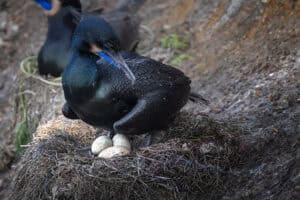
This year, the SC evaluated Dr. Julie Thayer’s (Farallon Institute) work developing a habitat quality indicator for open-water habitat at the ocean-estuary interface, using Brandt’s cormorant as the indicator species. This work addresses a gap in our 2022 Implementation Strategy, which recognizes the importance of the Estuary’s deeper, open waters but lacks a specific goal for this habitat. After reviewing the species against our indicator selection criteria, the SC recommended adding Brandt’s cormorant to our wildlife indicators. Work will continue to fully integrate the species into the indicators and better track open-water habitat quality.